













Руководство по покупке жемчужных ожерелий
Pearl Necklace Buying Guide: How to Spot Real Pearls & Assess Quality
The Cariette Gemology Handbook
A pearl necklace is the epitome of timeless elegance—an heirloom that transcends generations. Yet not all pearls are created equal. At Кариетт, we believe informed collectors make the most exquisite choices. Here is everything you need to know to distinguish authentic pearls from imitations and evaluate true quality.
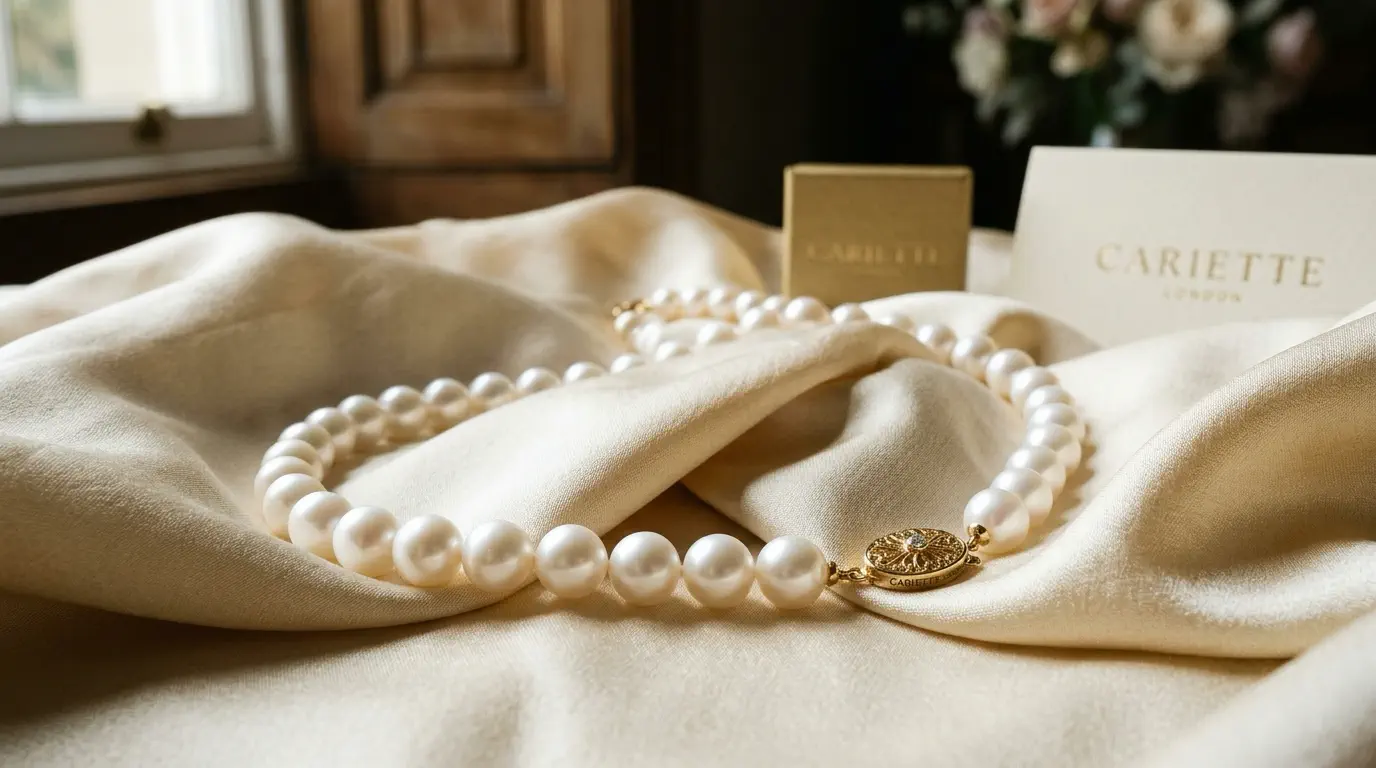
Timeless sophistication: the pearl necklace as a statement of enduring grace.
Table of Contents
How to Tell Real Pearls from Fake
In a market flooded with imitations, knowing how to identify genuine pearls is your first line of defense. Here are four definitive tests any collector can perform.
- The Tooth Test: Gently rub the pearl against the edge of your tooth. Real pearls feel slightly gritty due to their crystalline nacre layers. Fake pearls feel unnaturally smooth and glassy.
- The Luster Test: Hold the pearl under natural light. Authentic pearls possess a deep, inner glow with subtle overtones—never a flat, painted sheen.
- The Weight Test: Real pearls feel surprisingly substantial. Imitation plastic pearls are featherlight, while glass fakes may feel too heavy and cold.
- The Drill Hole Inspection: Examine the hole with a loupe. Real pearls show concentric nacre layers. Fakes reveal a uniform core or chipped coating.
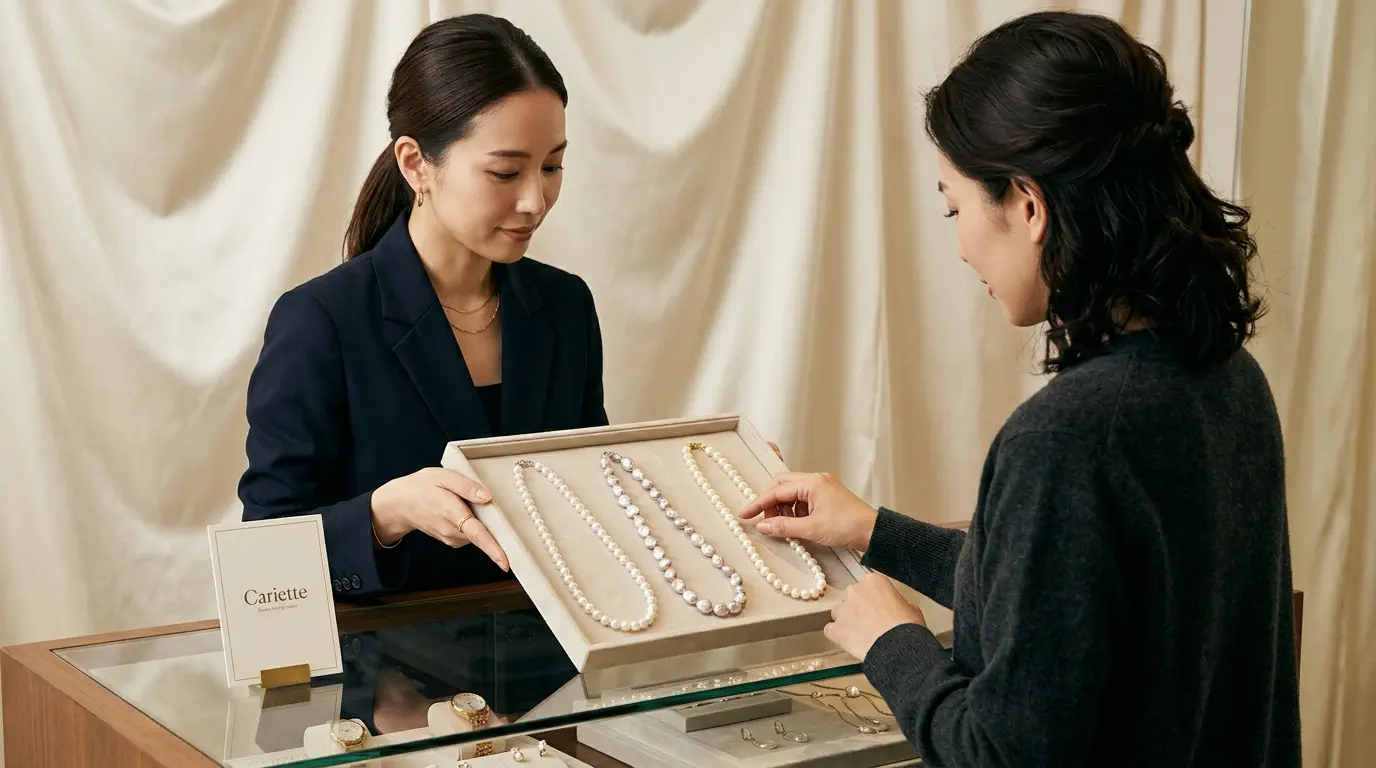
At Cariette, every pearl undergoes rigorous gemological verification. We provide certificates of authenticity with every piece—because trust is the foundation of true luxury.
Real Pearls
- Slightly gritty texture
- Deep, complex luster
- Natural color variations
- Warm to the touch
- Irregular shapes common
Fake Pearls
- Perfectly smooth surface
- Flat, uniform shine
- Identical color across strand
- Cold and plastic-like
- Perfectly spherical
Luster: The Soul of the Pearl
Luster is the most critical quality factor—and the hardest to fake. It refers to the intensity and sharpness of light reflected from the pearl's surface. High-luster pearls mirror your reflection with crystalline clarity, while low-luster pearls appear milky or dull.
Premium pearls, such as Akoya и South Sea varieties, are celebrated for their mirror-like luster. This radiance is built layer by layer over years inside the oyster—a patience that no factory can replicate.
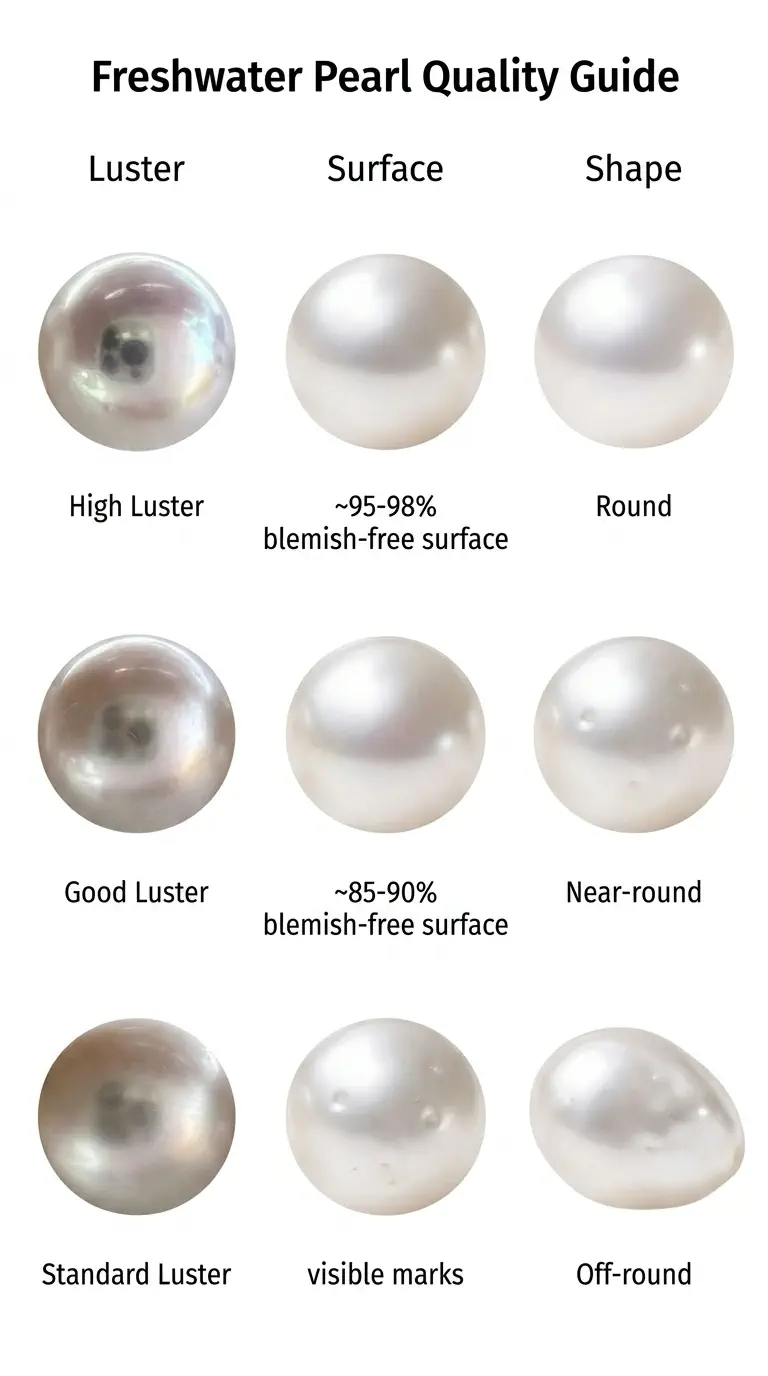
From standard to high luster: the visual spectrum of pearl radiance.
Surface Quality & Blemishes
Perfectly blemish-free pearls are exceptionally rare—and command premium prices. Most genuine pearls bear minor surface imperfections: tiny pits, wrinkles, or color variations that testify to their organic origin.
- Clean Surface (AAA): 95%+ blemish-free. The pinnacle of perfection.
- Minor Blemishes (AA): 85–95% clean. Excellent value with minimal visible marks.
- Noticeable Marks (A): 75–85% clean. Character-rich pearls at accessible price points.
Cariette Standard: We exclusively select pearls graded AA and above. Every strand is hand-matched for surface consistency, ensuring that any natural markings are subtle and do not detract from the overall radiance.
Shape, Size & Color
While round pearls have long been the gold standard, modern collectors increasingly embrace baroque and drop shapes for their unique, sculptural beauty.
- Round: The classic ideal. Perfectly spherical pearls are the rarest and most valuable.
- Near-Round: Slightly oval when rolled. An excellent compromise between beauty and value.
- Baroque: Irregular, free-form shapes. Each pearl is one of a kind—favored by avant-garde designers.
- Drop & Button: Teardrop or flattened profiles. Ideal for pendants and earrings.
Size is measured in millimeters across the diameter. A classic pearl necklace typically features 7–8mm pearls, while statement pieces may showcase 10–15mm South Sea or Tahitian varieties.
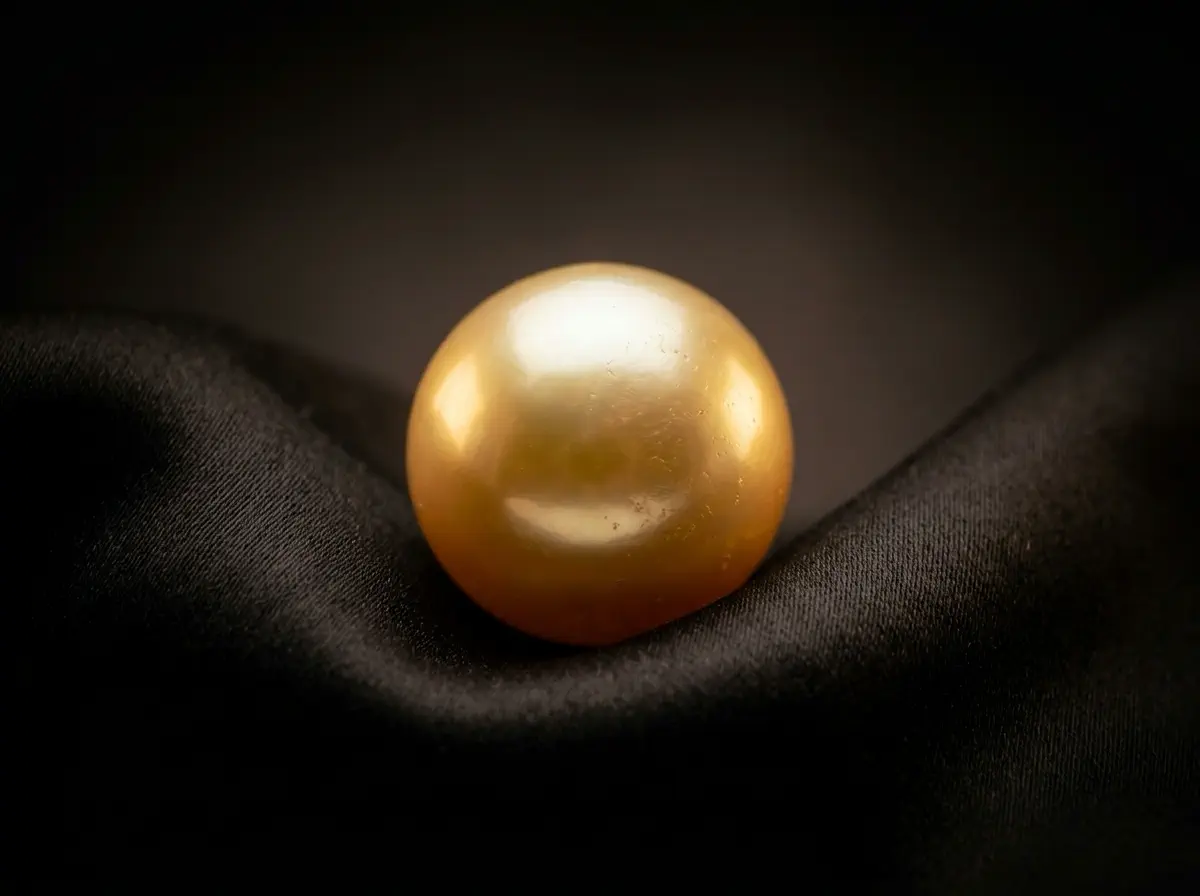
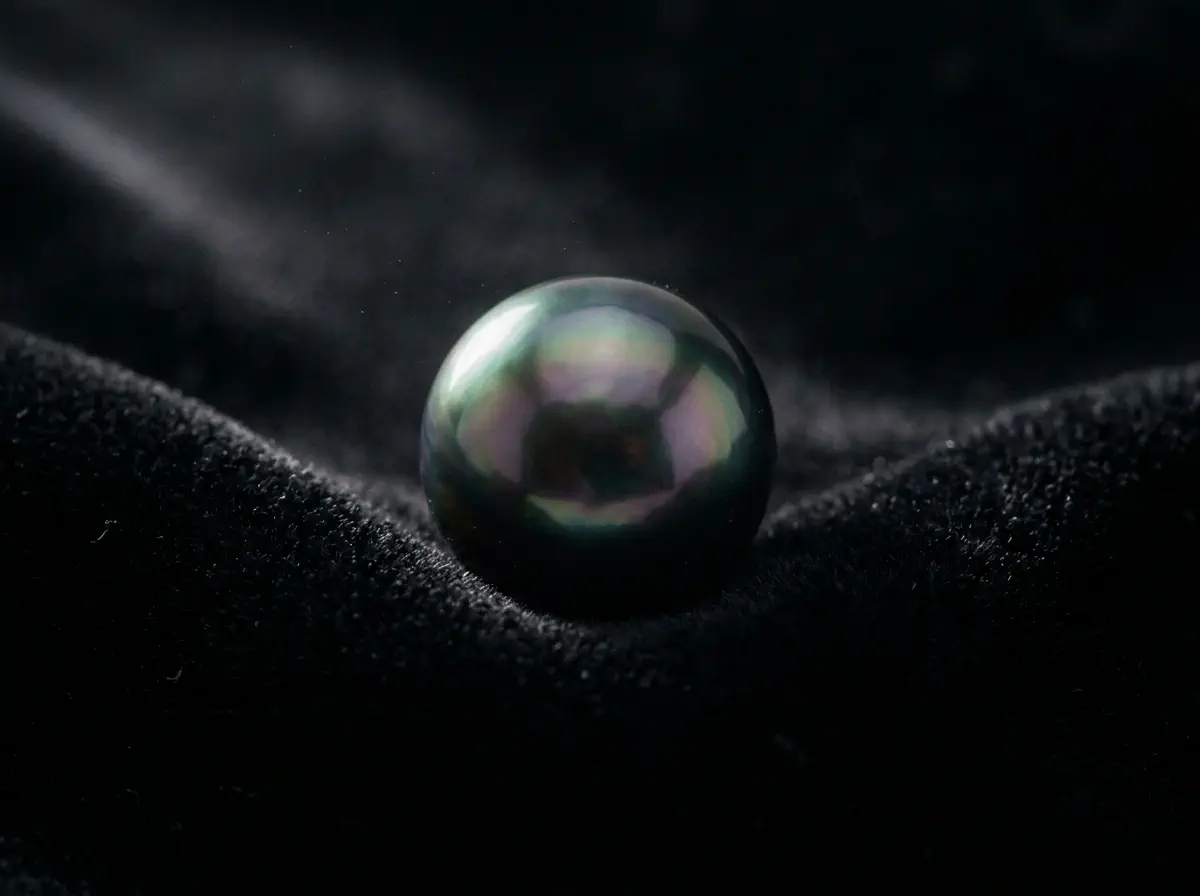
Left: A luminous Golden South Sea pearl. Right: The mystique of Tahitian black pearls.
Pearl Types & Origins
Understanding pearl provenance is essential for any serious collector. Each type carries distinct characteristics of color, size, and luster.
- Akoya Pearls: Cultivated primarily in Japan and China. Renowned for their brilliant luster and classic white-cream hues with rose or silver overtones. Typically 6–9mm.
- South Sea Pearls: The largest and most luxurious. Cultivated in Australia, Indonesia, and the Philippines. White and golden varieties range from 9–16mm with a satin, soft luster.
- Tahitian Pearls: From French Polynesia. Famous for their dramatic dark body colors—black, grey, peacock green, and aubergine. Sizes range 8–14mm.
- Freshwater Pearls: Cultivated in lakes and rivers, primarily China. Offer exceptional variety in shape and color at accessible price points. Sizes 4–12mm.
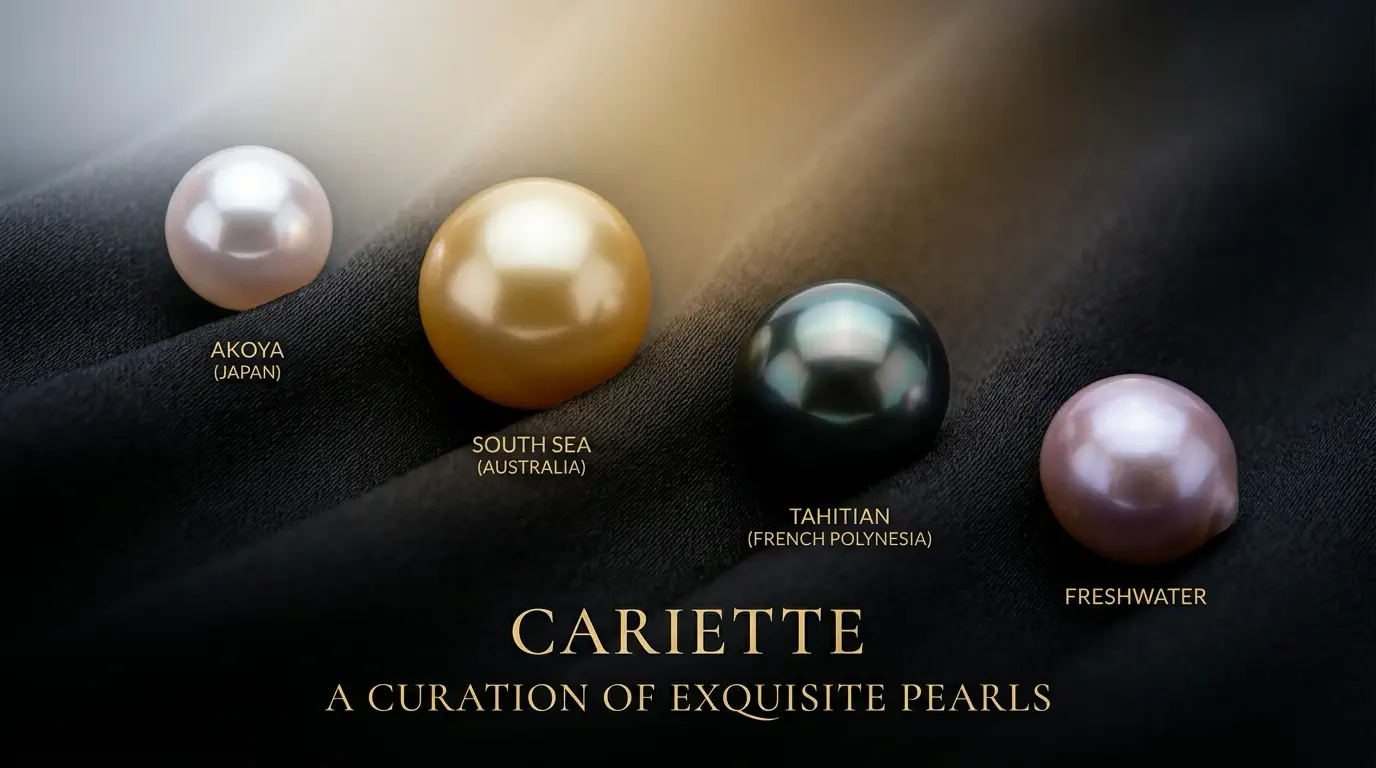
A spectrum of natural hues: from champagne to midnight black.
When selecting your first pearl necklace, consider your skin undertone. Warm complexions glow with golden and cream pearls, while cool undertones are beautifully complemented by silver-white Akoya and grey Tahitian varieties.
Care & Longevity
Pearls are organic gems—delicate, living treasures that require mindful care. With proper attention, a Cariette pearl necklace will remain luminous for generations.
- Wear Them Often: Natural skin oils help maintain pearl luster. Pearls thrive on contact.
- Last On, First Off: Apply perfume, cosmetics, and hairspray before putting on your pearls. Chemicals can erode nacre over time.
- Soft Cloth Only: Wipe gently with a soft, damp cloth after each wear. Never use ultrasonic cleaners or harsh chemicals.
- Separate Storage: Store pearls in a soft pouch, away from harder gemstones that may scratch their surface.
The Cariette Promise: Every pearl necklace in our collection arrives with a lifetime care guide and complimentary annual restringing service. Because true luxury is not merely possession—it is stewardship.
Frequently Asked Questions
How much should a real pearl necklace cost?
Quality varies widely. Entry-level freshwater pearl necklaces start around $150–$500. Fine Akoya strands range from $1,000–$5,000. Premium South Sea and Tahitian necklaces can command $5,000–$50,000+ depending on size, luster, and surface quality.
Do real pearls turn yellow over time?
If exposed to excessive heat, sunlight, or chemicals, pearls can gradually yellow. Proper storage and regular wear help maintain their natural color. At Cariette, we treat every strand with protective coatings to enhance longevity.
Can I wear my pearl necklace every day?
Absolutely—pearls love to be worn. Daily wear actually benefits their luster. Simply wipe them gently after use and store them separately from other jewelry to prevent scratches.
What is the best length for a pearl necklace?
The Princess length (17–19 inches) is the most versatile, sitting elegantly at the collarbone. Choker length (14–16 inches) offers modern sophistication, while Opera length (28–34 inches) makes a dramatic statement.
Discover Your Perfect Pearl
Explore the Cariette pearl collection—where every strand is hand-selected for luster, surface perfection, and timeless beauty. From Akoya classics to South Sea statements, find the necklace that was meant for you.
Shop Pearl NecklacesCariette — Luxury Pearls, Watches, Bags, Jewelry & Cosmetics