
















A Arte da Montagem de Joias — Da Montagem com Garras ao Pavé


Cariette Craftsmanship
The Art of Jewelry Setting: From Prong to Pavé
A masterclass in the techniques that transform gemstones into heirlooms — and how to choose the setting that tells your story.
The setting is where science meets poetry. It is the architecture that holds a gemstone, the stage that amplifies its brilliance, and the shield that protects it for generations. At Cariette, every piece begins with a decision about how the stone and metal will coexist — a choice that defines not only the aesthetic, but the very soul of the jewelry.
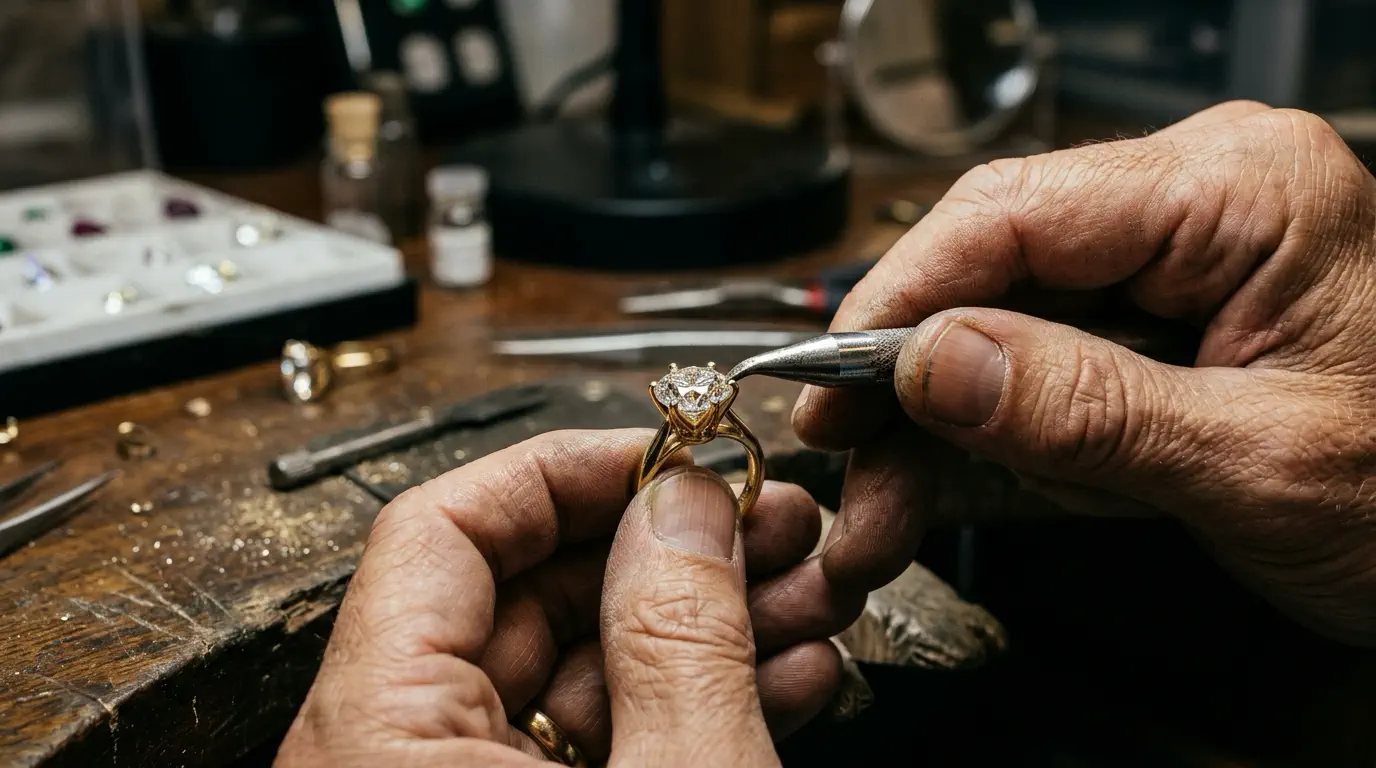
The Bench Jeweler's Touch
Each setting technique demands a distinct mastery. From the precision of prong placement to the patience of pavé beadwork, these are skills honed over decades — not merely processes, but forms of artistic expression passed from master to apprentice.
The Five Foundational Settings
These five techniques form the backbone of fine jewelry design. Each offers a unique balance of light, security, and silhouette — and each is suited to a different kind of life and love.
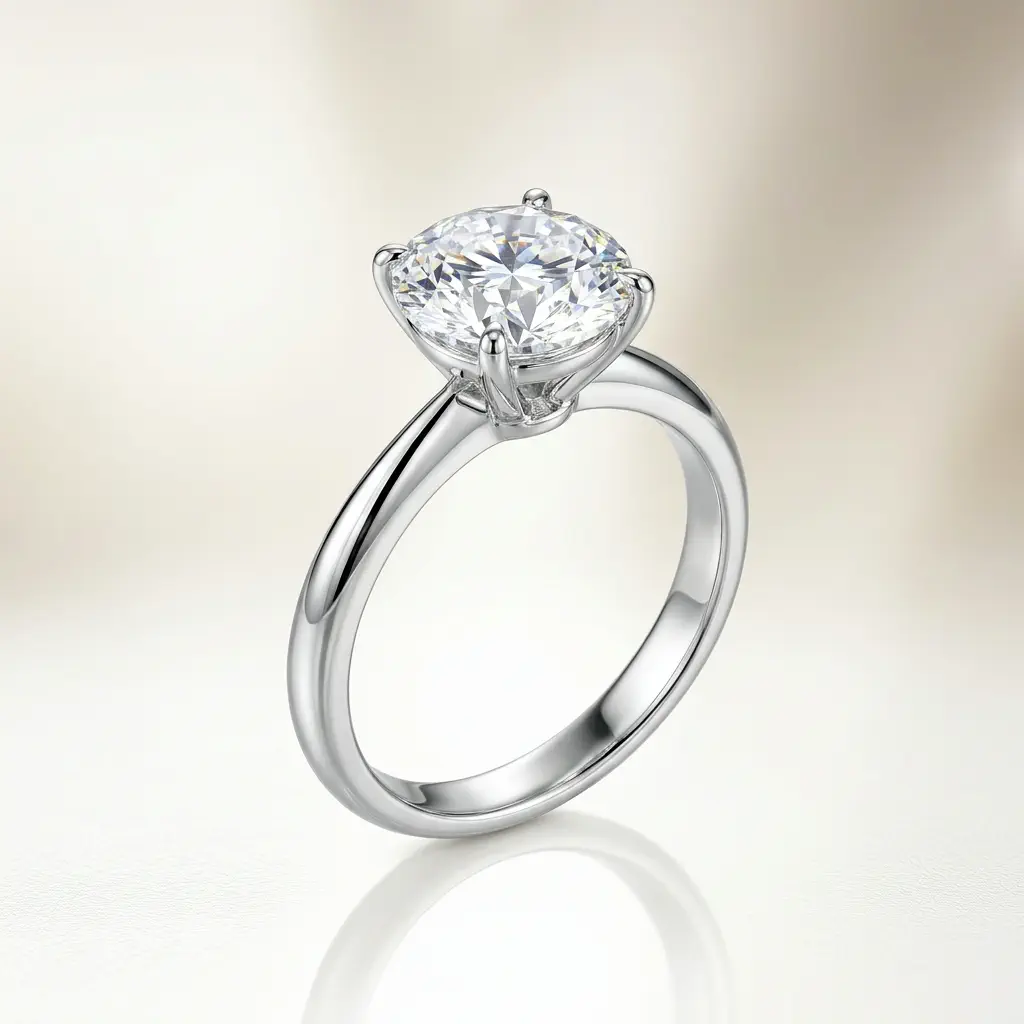
The Classic
Prong Setting
Small metal claws — typically four or six — grip the diamond at its girdle, elevating it above the band to allow maximum light entry from every angle. The result is unmatched brilliance and the timeless silhouette that defines the solitaire engagement ring.
The Protector
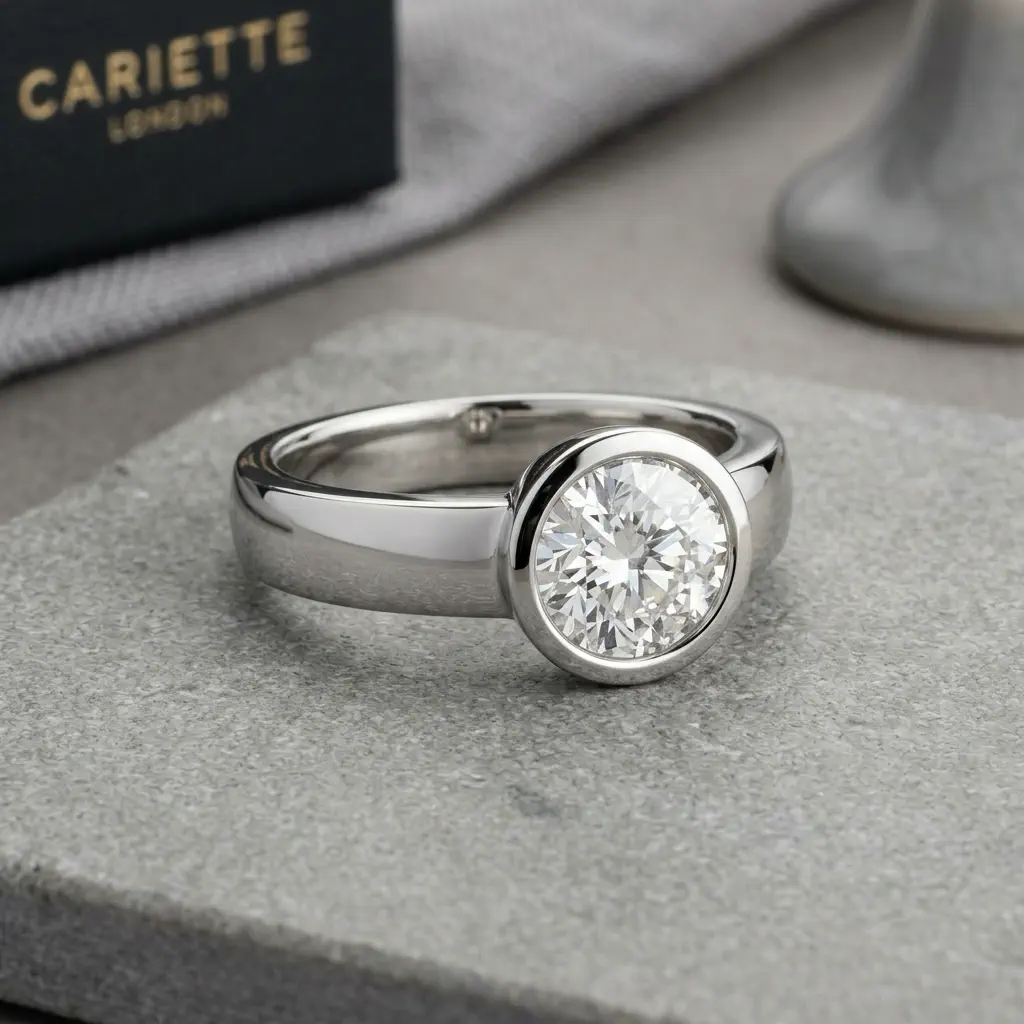
Bezel Setting
A continuous rim of precious metal wraps entirely around the gemstone's edge, folding over the girdle to create a secure, sleek frame. The oldest protective technique still in use, prized for its modern minimalism and absolute security.
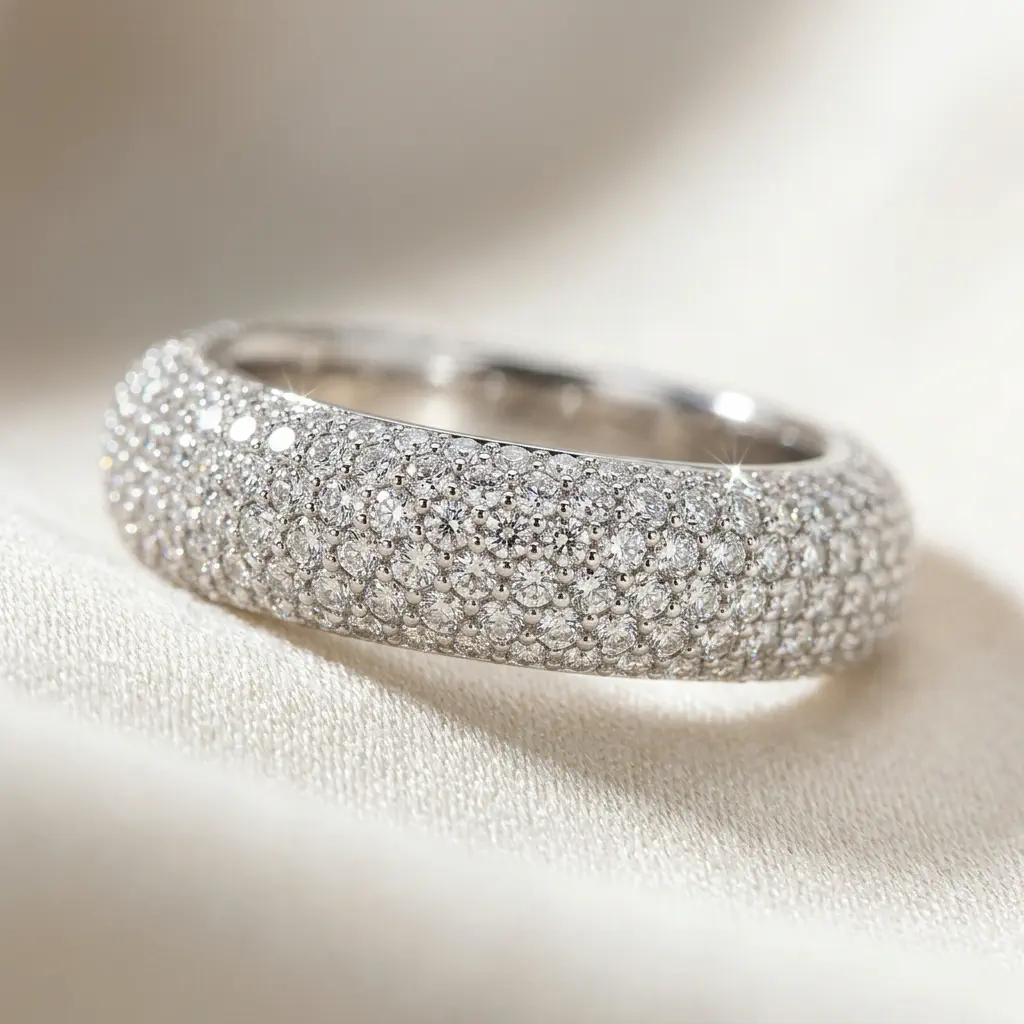
The Luminous
Pavé Setting
From the French word for "paved," this technique sets tiny diamonds closely together across a surface, held by miniature beads of metal. The effect is a seamless carpet of light — unbroken sparkle that transforms bands into constellations.
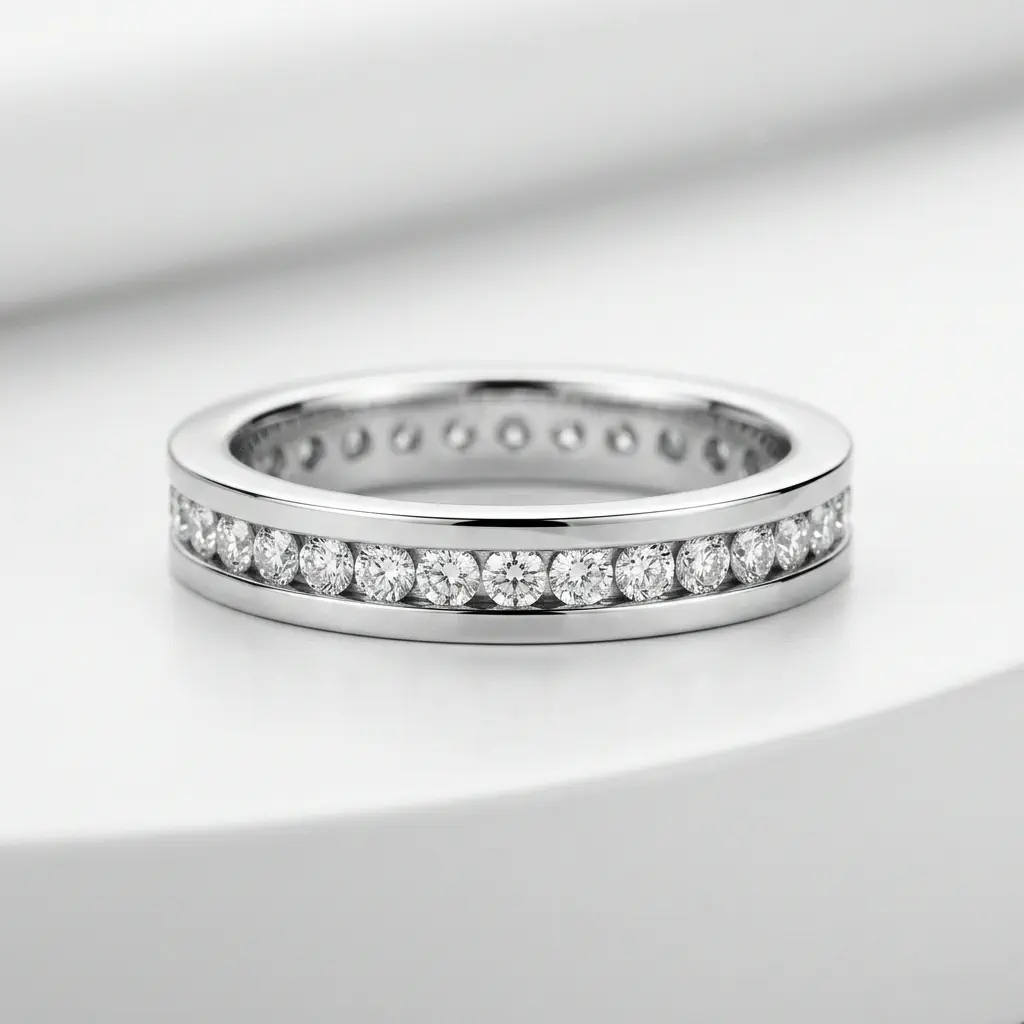
The Streamlined
Channel Setting
Gemstones are nestled into a groove between two parallel metal walls, secured by hammering the upper edges of the channel inward. No prongs interrupt the surface — just a continuous, unbroken line of stones that feels both architectural and elegant.
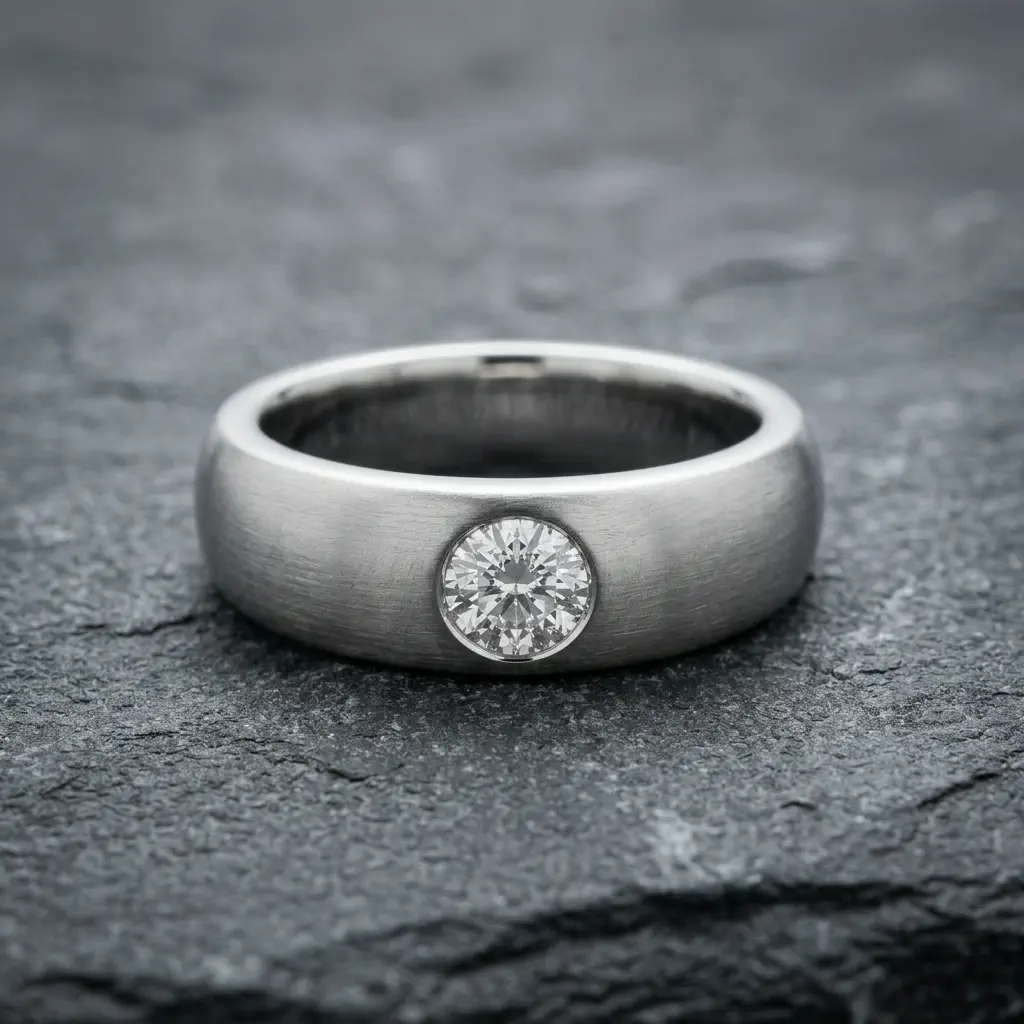
The Understated
Flush Setting
The gemstone is embedded directly into the metal surface so its table sits level with — or slightly below — the surrounding band. Also known as gypsy or burnish setting, it offers the ultimate in durability and clean, contemporary minimalism.
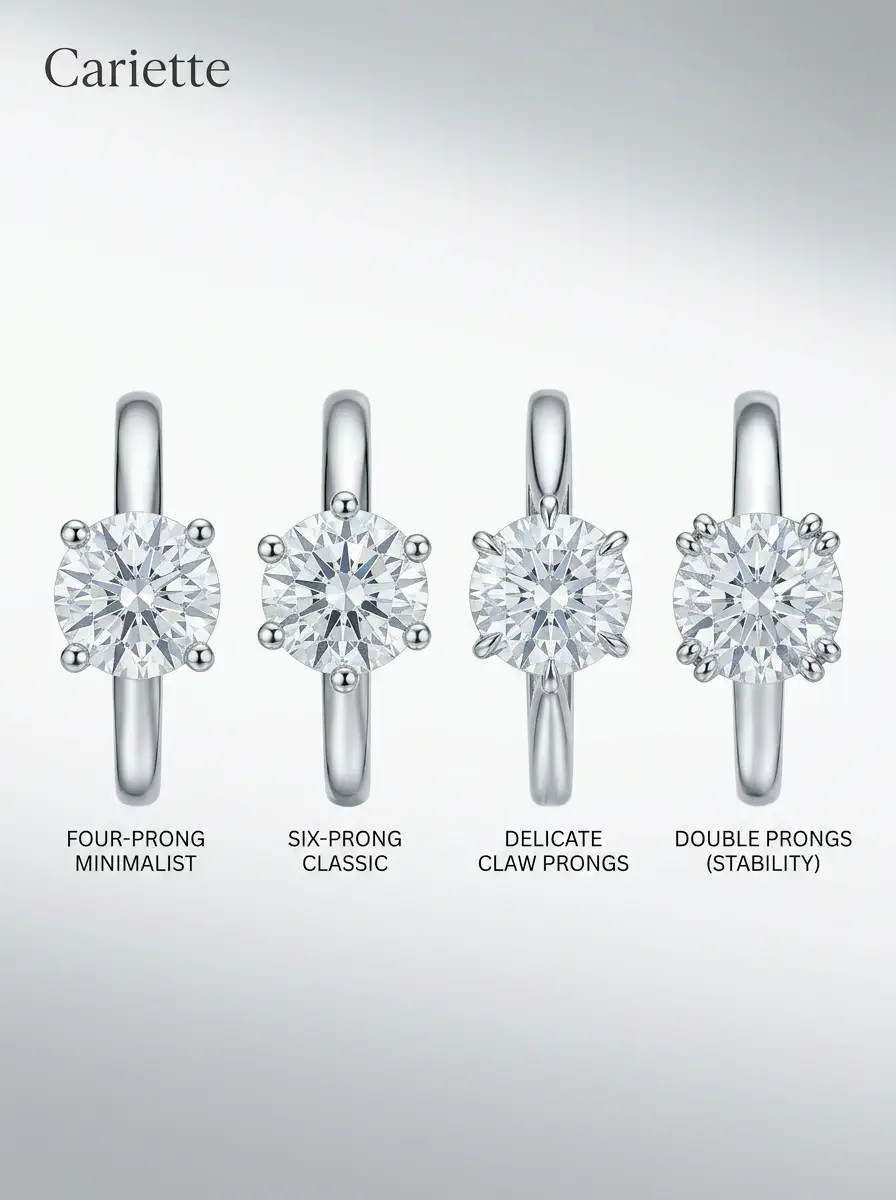
The Light Maximizer
Prong Setting Variations
Not all prongs are created equal. The four-prong configuration offers a modern, minimalist look that exposes more of the diamond's surface. Six prongs provide classic security and emphasize roundness. Claw prongs taper to delicate points for feline elegance, while double prongs add stability for larger stones.
- 4-prong: Modern, maximizes light exposure
- 6-prong: Classic, superior security
- Claw prongs: Elegant, tapered silhouette
- V-prongs: Protects pointed cuts (pear, marquise)
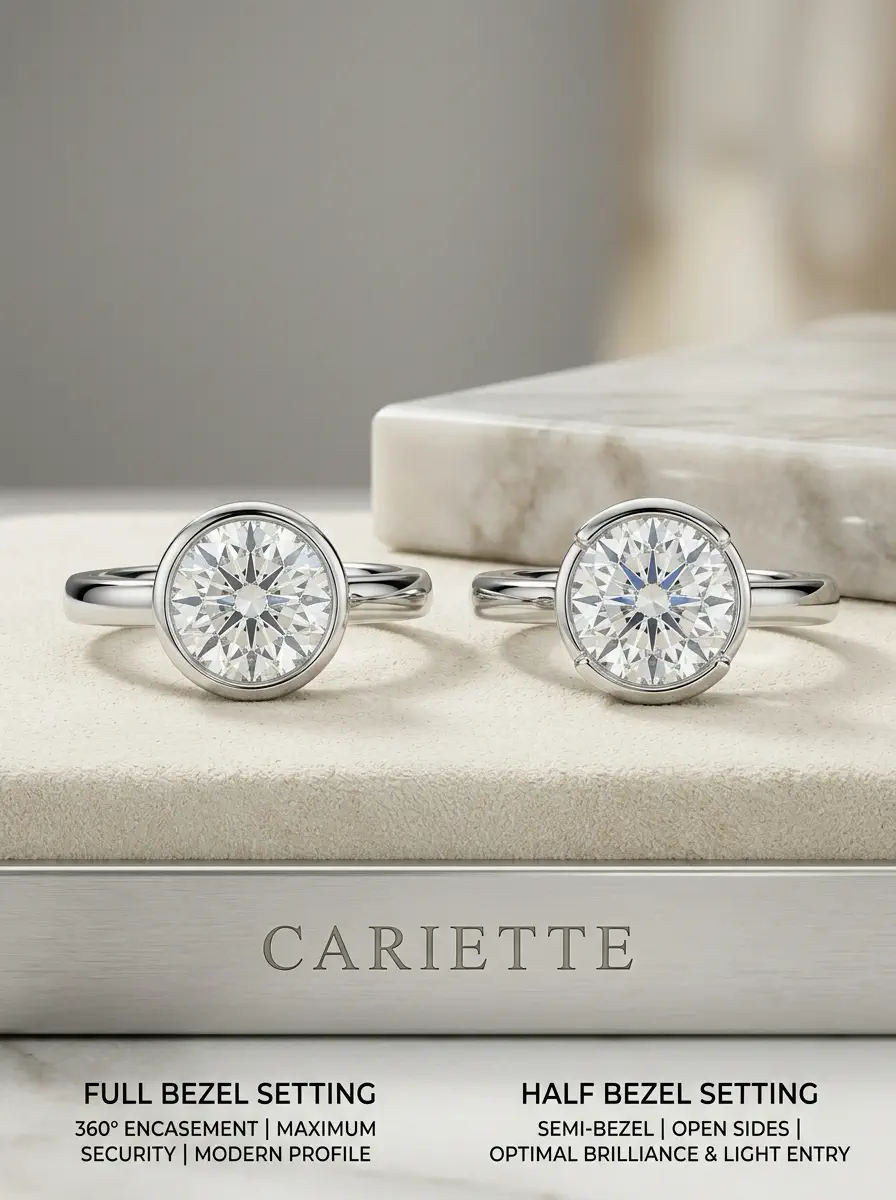
The Fortress
Full Bezel vs. Half Bezel
A full bezel encircles the entire gemstone, offering 360-degree protection against chips, snags, and impacts. A half bezel — or semi-bezel — leaves portions of the stone's edge exposed, typically the sides, allowing more light to enter while maintaining structural protection at the most vulnerable points.
- Full bezel: Maximum security, sleek modern look
- Half bezel: Balanced protection with added brilliance
- Ideal for: Emerald, Asscher, and fancy shapes
- Metal width: typically 1.5–2mm for optimal aesthetics
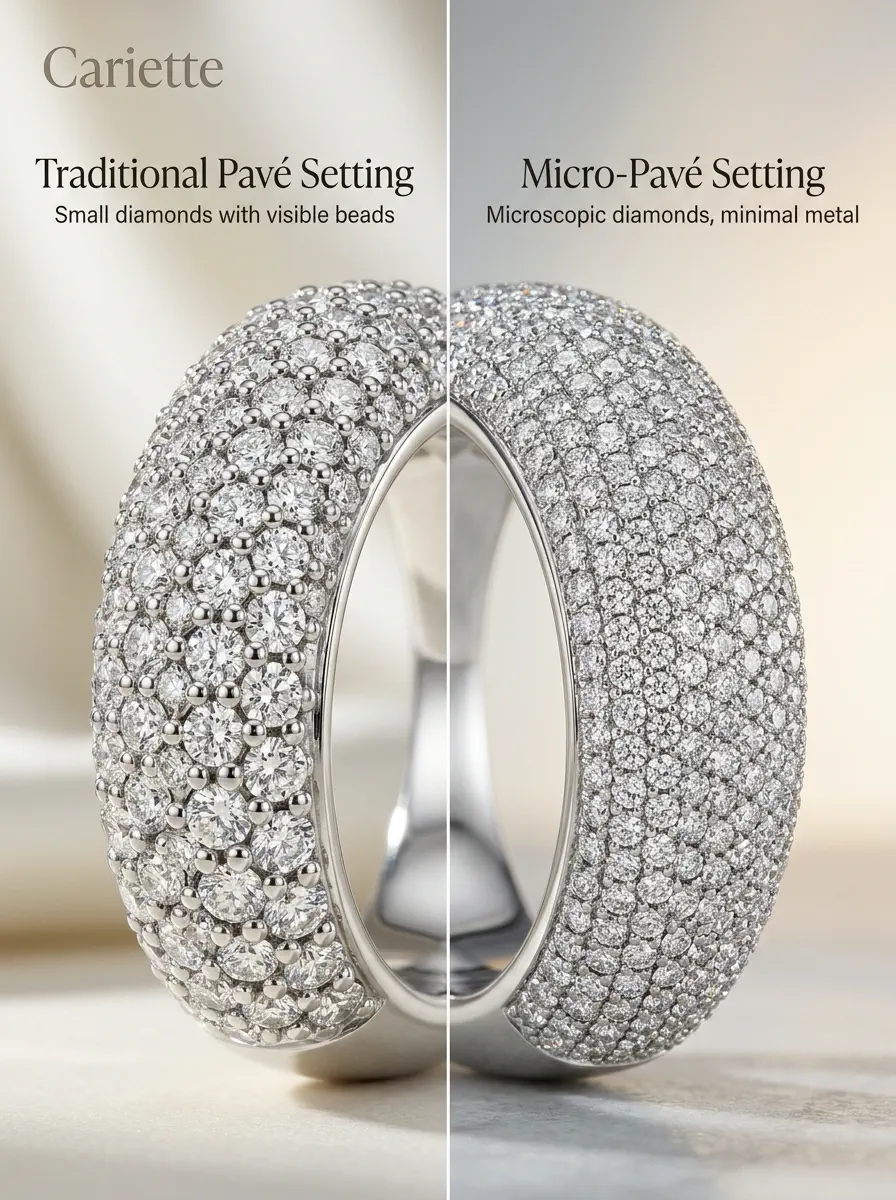
The Artisan's Patience
Pavé, Micro-Pavé & Bead Setting
Pavé is the foundation; micro-pavé is the refinement. Micro-pavé uses stones under 0.01 carat, set with microscopic precision under high magnification. Each bead of metal is raised and shaped by hand, creating a surface so densely studded that the metal nearly disappears beneath a sea of light.
- Pavé: Stones 0.01–0.03 ct, set with visible beads
- Micro-pavé: Stones under 0.01 ct, microscope-guided
- Bead setting: The foundational technique behind both
- Requires: Specialized training, steady hands, magnification
Beyond the Foundations
Tension Setting
The gemstone appears to float, held by the calibrated pressure of the metal band itself. Requires engineering precision and stones of Mohs hardness 9 or above.
Halo Setting
A ring of smaller diamonds surrounds the center stone, creating the illusion of up to 50% greater size while amplifying overall brilliance.
Invisible Setting
Grooves cut into the girdle of each stone allow them to slot together without visible metal — a seamless mosaic of pure gemstone surface.
Bar Setting
Similar to channel setting but with vertical metal bars between each stone, opening light passages while maintaining individual security.
Choosing Your Setting: A Three-Step Framework
1
Match the Stone
Round brilliants thrive in prongs; step-cuts prefer bezels. Pointed shapes need V-prong or bezel protection. Soft stones (emerald, opal, pearl) demand bezel or flush settings for protection.
2
Match Your Lifestyle
Active hands? Choose bezel, channel, or flush. Desk-based professional? Prong or halo maximizes sparkle. Frequent traveler? Low-profile settings minimize snagging and security concerns.
3
Match Your Aesthetic
Classic romantic? Four-prong solitaire. Modern minimalist? Full bezel or tension. Maximum drama? Pavé halo with channel band. Understated elegance? Flush-set accent stones.
Caring for Your Setting
Every setting has its own maintenance rhythm. Understanding these needs ensures your jewelry remains as secure and brilliant as the day it was crafted.
Prong Settings
Inspect every 6–12 months. Look for thinning, bending, or loosening. Retipping worn prongs costs $30–$60 per prong — far less than replacing a lost stone.
Bezel Settings
Low maintenance but inspect rim integrity annually. Check for gaps where metal meets stone. Polish every 12–18 months to restore the mirror finish.
Pavé Settings
Most demanding. Clean gently with soft brush and mild soap. Avoid ultrasonic cleaning unless confirmed safe by your jeweler. Check each micro-prong annually.
Channel & Flush
Durable and low-maintenance. Inspect channel walls for wear. Flush settings rarely need adjustment but benefit from annual cleaning to remove trapped oils.
Commission Your Masterpiece at Cariette
Explore our curated collection of fine jewelry — each piece a testament to the setting techniques that have defined centuries of craftsmanship.
Explore The CollectionFrequently Asked Questions
Which setting is the most secure for everyday wear?
The bezel setting is widely considered the most secure. Its continuous metal rim fully encircles the gemstone, making it nearly impossible for the stone to loosen or fall out during normal wear. Flush settings are equally secure but offer less visual prominence for center stones.
Does a bezel setting make a diamond look smaller?
A bezel covers a small portion of the diamond's perimeter, which can marginally reduce the visible surface area. However, the metal rim can also create the illusion of a larger stone by extending the visual diameter.








Iniciar sessão
Ainda não tem conta?
Criar uma conta